 e4d91aadf9
- Full Obsidian vault content
- Host configs (ice, grizzley, ubuntu, proxmox, truenas, panda, hyte)
- Media stack documentation
- Traefik HA setup
- Automation scripts
- Bachelor party planning
158 lines
6.2 KiB
Markdown
158 lines
6.2 KiB
Markdown
---
|
||
type: agent-doc
|
||
agent: ForgeCode
|
||
source: https://forgecode.dev/blog/deepseek-r1-0528-coding-experience-review/
|
||
scraped: 2026-04-28T19:05:10.687166+00:00
|
||
content_hash: cd729071
|
||
---
|
||
# DeepSeek-R1-0528: A Detailed Review of its AI Coding Performance & Latency
|
||
|
||
|
||
|
||
## TL;DR
|
||
|
||
- DeepSeek-R1-0528: Latest open source reasoning model with MIT license
|
||
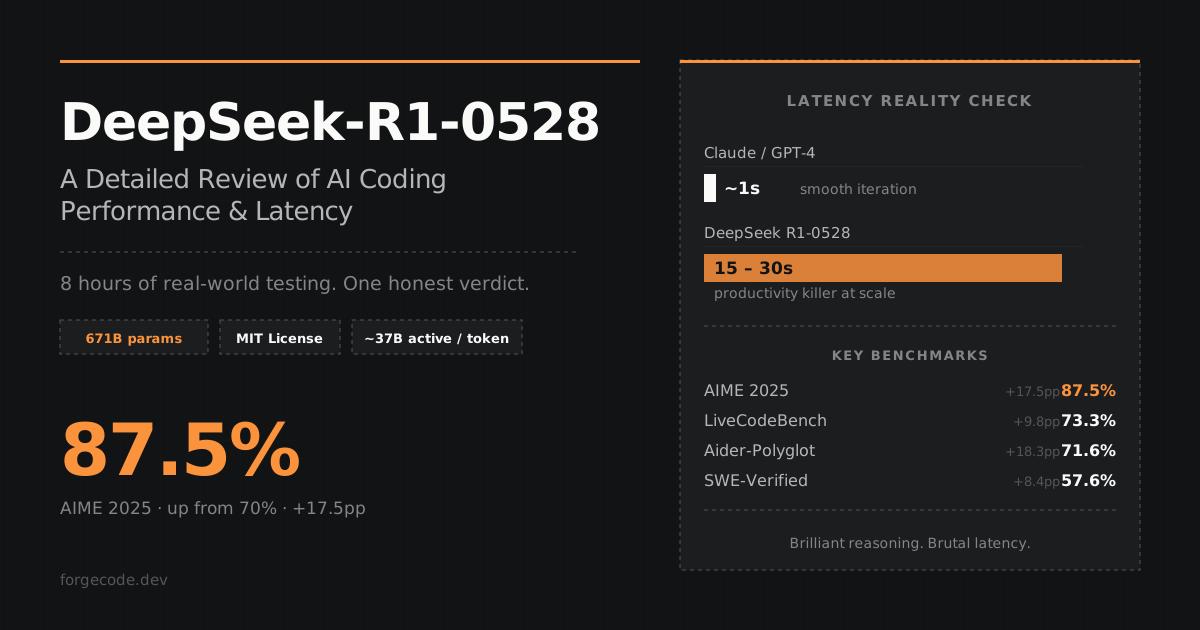
- Major breakthrough: Significantly improved performance over previous version (87.5% vs 70% on AIME 2025)
|
||
- Architecture: 671B total parameters, ~37B active per token via Mixture-of-Experts
|
||
- Major limitation: 15-30s latency via OpenRouter API vs ~1s for other models
|
||
- Best for: Complex reasoning, architectural planning, vendor independence
|
||
- Poor for: Real-time coding, rapid iteration, interactive development
|
||
- Bottom line: Impressive reasoning capabilities, but latency challenges practical use
|
||
|
||
## The Promise vs. My 8-Hour Reality Check
|
||
|
||
> From @deepseek_ai: DeepSeek-R1-0528 is now available! This latest reasoning model shows substantial improvements across benchmarks while maintaining MIT licensing for complete open-source access.
|
||
> Source: https://x.com/deepseek_ai/status/1928061589107900779
|
||
|
||
My response: Hold my coffee while I test this "breakthrough"...
|
||
|
||
SPOILER: It's brilliant... if you can wait 30 seconds for every response. And it keeps increasing as your context grows
|
||
|
||
I was 47 minutes into debugging a Rust async runtime when DeepSeek-R1-0528 (via my favorite coding agent) finally responded with the perfect solution. By then, I'd already fixed the bug myself, grabbed coffee, and started questioning my life choices.
|
||
|
||
Here's what 8 hours of testing taught me about the latest "open source breakthrough."
|
||
|
||
## Reality Check: Hype vs. My Actual Experience
|
||
|
||
DeepSeek's announcement promises groundbreaking performance with practical accessibility. After intensive testing, here's how those claims stack up:
|
||
|
||
| DeepSeek's Claim | My Reality | Verdict |
|
||
|---|---|---|
|
||
| "Matches GPT/Claude performance" | Often exceeds it on reasoning | TRUE |
|
||
| "MIT licensed open source" | Completely open, no restrictions | TRUE |
|
||
| "Substantial improvements" | Major benchmark gains confirmed | TRUE |
|
||
|
||
The breakthrough is real. The daily usability is... challenging.
|
||
|
||
Before diving into why those response times matter so much, let's understand what makes this model technically impressive enough that I kept coming back despite the frustration.
|
||
|
||
## The Tech Behind the Magic (And Why It's So Slow)
|
||
|
||
### Key Architecture Stats
|
||
|
||
- 671B total parameters (685B with extras)
|
||
- ~37B active per token via Mixture-of-Experts routing
|
||
- 128K context window
|
||
- MIT license (completely open source)
|
||
- Cost: $0.50 input / $2.18 output per 1M tokens
|
||
|
||
### Why the Innovation Matters
|
||
|
||
R1-0528 achieves GPT-4 level reasoning at ~5.5% parameter activation cost through:
|
||
|
||
1. Reinforcement Learning Training: Pure RL without supervised fine-tuning initially
|
||
2. Chain-of-Thought Architecture: Multi-step reasoning for every response
|
||
3. Expert Routing: Different specialists activate for different coding patterns
|
||
|
||
### Why It's Painfully Slow
|
||
|
||
Every response requires:
|
||
|
||
- Thinking tokens: Internal reasoning in <think>...</think> blocks (hundreds-thousands of tokens)
|
||
- Expert selection: Dynamic routing across 671B parameters
|
||
- Multi-step verification: Problem analysis → solution → verification
|
||
|
||
When R1-0528 generates a 2000-token reasoning trace for a 100-token answer, you pay computational cost for all 2100 tokens.
|
||
|
||
## The Benchmarks Don't Lie (But They Don't Code Either)
|
||
|
||
The performance improvements are legitimate:
|
||
|
||
### Key Wins
|
||
|
||
| Benchmark | Previous | R1-0528 | Improvement |
|
||
|---|---|---|---|
|
||
| AIME 2025 | 70.0% | 87.5% | +17.5% |
|
||
| Coding (LiveCodeBench) | 63.5% | 73.3% | +9.8% |
|
||
| Codeforces Rating | 1530 | 1930 | +400 points |
|
||
| SWE Verified (Resolved) | 49.2% | 57.6% | Notable progress |
|
||
| Aider-Polyglot | 53.3% | 71.6% | Major improvement |
|
||
|
||
But here's the thing: Benchmarks run with infinite patience. Real development doesn't.
|
||
|
||
### The Latency Reality
|
||
|
||
| Model Type | Response Time | Developer Experience |
|
||
|---|---|---|
|
||
| Claude/GPT-4 | 0.8-1.0s | Smooth iteration |
|
||
| DeepSeek-R1-0528 | 15-30s | Productivity killer |
|
||
|
||
## When R1-0528 Actually Shines
|
||
|
||
Despite my latency complaints, there are genuine scenarios where waiting pays off:
|
||
|
||
### Perfect Use Cases
|
||
|
||
- Large codebase analysis (20,000+ lines) - leverages 128K context beautifully
|
||
- Architectural planning - deep reasoning justifies wait time
|
||
- Precise instruction following - delivers exactly what you ask for
|
||
- Vendor independence - MIT license enables self-hosting
|
||
|
||
### Frustrating Use Cases
|
||
|
||
- Real-time debugging - by the time it responds, you've fixed it
|
||
- Rapid prototyping - kills the iterative flow
|
||
- Learning/exploration - waiting breaks the learning momentum
|
||
|
||
### Reasoning Transparency
|
||
|
||
The "thinking" process is genuinely impressive:
|
||
|
||
1. Problem analysis and approach planning
|
||
2. Edge case consideration
|
||
3. Solution verification
|
||
4. Output polishing
|
||
|
||
Different experts activate for different patterns (API design vs systems programming vs unsafe code).
|
||
|
||
## My Honest Take: Historic Achievement, Practical Challenges
|
||
|
||
### The Historic Achievement
|
||
|
||
- First truly competitive open reasoning model
|
||
- MIT license = complete vendor independence
|
||
- Proves open source can match closed systems
|
||
|
||
### The Daily Reality
|
||
|
||
Remember that 47-minute debugging session? It perfectly captures the R1-0528 experience: technically brilliant, practically challenging.
|
||
|
||
The question isn't whether R1-0528 is impressive - it absolutely is.
|
||
|
||
The question is whether you can build your workflow around waiting for genius to arrive.
|
||
|
||
## Community Discussion
|
||
|
||
Drop your experiences below:
|
||
|
||
- Have you tested R1-0528 for coding? What's your patience threshold?
|
||
- Found ways to work around the latency?
|
||
|
||
## The Bottom Line
|
||
|
||
DeepSeek's announcement wasn't wrong about capabilities - the benchmark improvements are real, reasoning quality is impressive, and the MIT license is genuinely game-changing.
|
||
|
||
For architectural planning where you can afford to wait? Absolutely worth it.
|
||
|
||
For rapid iteration? Not quite there yet.
|